- Omega-3
- Fish
- Eating out
- Allergens
Omega-3 from food, not capsules: how to find it on the menu
According to Germany's Federal Institute for Risk Assessment, healthy people who eat fish regularly do not need fish oil capsules. Which restaurant dishes provide omega-3, and what to order with a fish or nut allergy.

4 min readEm inglês
You don't need to buy omega-3 fatty acids as expensive capsules. Germany's Federal Institute for Risk Assessment (BfR) writes that healthy people do not need to add fish oil concentrates to their diet, especially if they eat fish regularly. The German Nutrition Society (DGE) recommends one to two portions of fish a week for this. That works well when eating out too, if you know which dishes and oils provide omega-3. This article covers what to order, and what to look out for if you can't eat fish or nuts.
In short: According to the DGE, one to two fish meals a week, one of them with oily fish such as salmon, mackerel or herring, cover your need for the important omega-3 fatty acids EPA and DHA. Rapeseed, walnut and linseed oil provide a plant-based precursor, but do not fully replace fish. If you have to avoid fish or nuts, ask the restaurant specifically about the oil and the ingredients.
What omega-3 is, in two sentences
Omega-3 fatty acids are polyunsaturated fatty acids. The most important are EPA and DHA, found mainly in oily fish, and ALA, found in some plant oils, linseed and walnuts.
The body can make EPA and DHA from ALA itself, but according to the DGE only to a limited extent. Plant sources are therefore more of an addition to fish than a full replacement.
How much is enough
According to the DGE, on current evidence a total of 250 mg of EPA and DHA a day is enough. Depending on the type of fish, one to two fish meals a week can cover this amount.
As a weekly guide, the BfR gives:
- 70 g of oily fish, for example mackerel, herring, tuna, wild salmon or sardines.
- 80 to 150 g of lean fish, for example cod, redfish, sole or haddock.
For omega-3 fatty acids, it is mainly the oily fish that counts.
What to order in the restaurant
Dishes with oily fish:
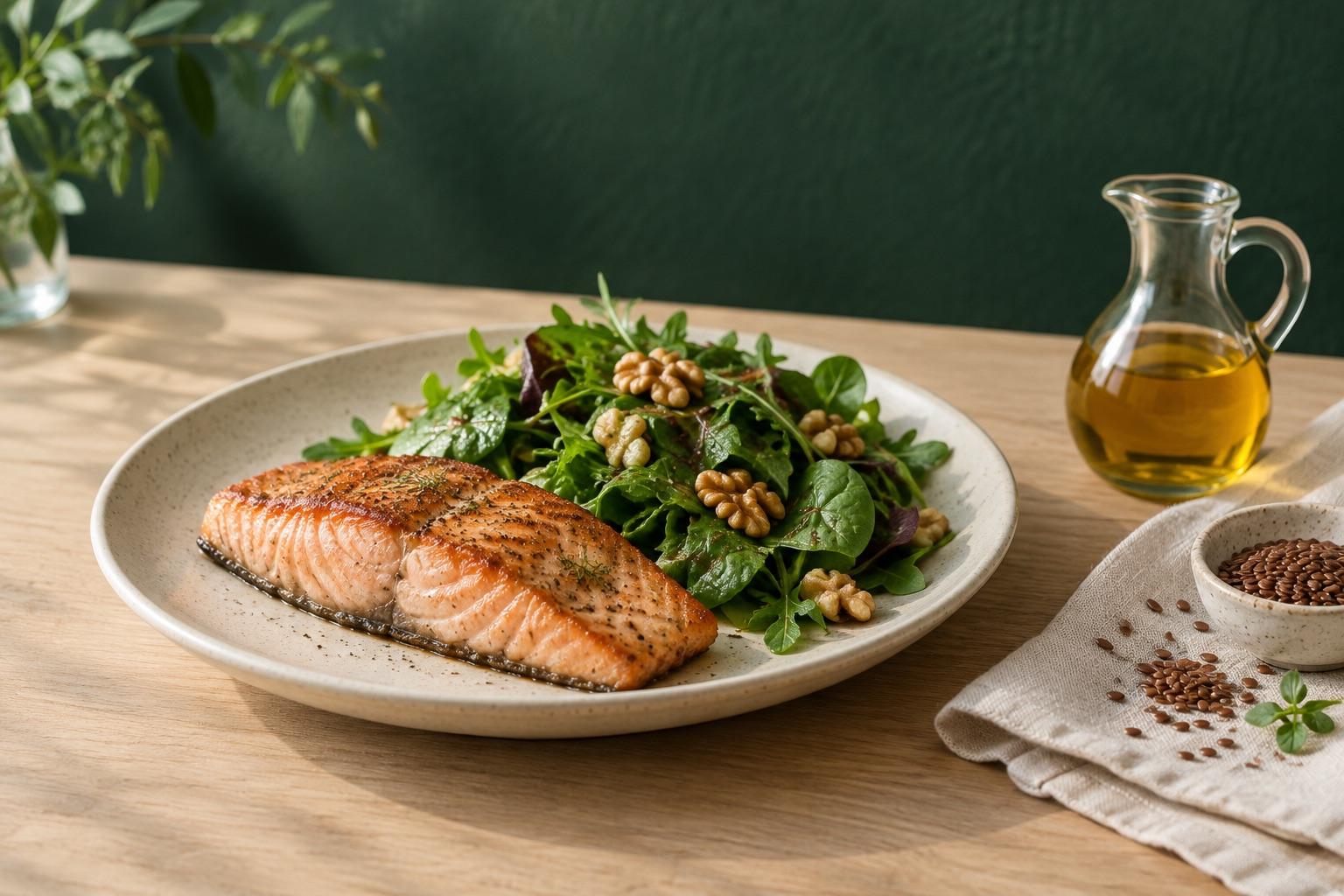
- Pan-fried or grilled salmon
- Mackerel or herring, for example as Matjes (young pickled herring) or smoked
- Sardines, grilled or as a starter
- Tuna, for example as a steak or in a salad
Breaded fish such as fish fingers or battered fish (Backfisch) is usually made from lean fish and brings less omega-3.
Plant sources on the menu:
- Salads with walnuts or linseed
- Dressings with rapeseed, walnut or linseed oil
- Dishes with soya beans or tofu, if prepared with soya oil
With a fish or nut allergy
The very foods with plenty of omega-3 are among the 14 main allergens. On Austrian menus they carry letter codes: fish (letter D), tree nuts such as walnuts (H) and soya (F). If you have to avoid one of them:
- With a fish allergy, rapeseed oil, linseed oil and linseed are your main options. Ask which oil the kitchen uses and whether fish is also fried in the same pan.
- With a nut allergy, walnut oil and walnuts are out. Ask whether the dressing contains nut oil. Rapeseed oil is not a tree nut.
- With a soya allergy, ask about soya oil in dressings and marinades.
Whether algae oil or other supplements make sense for you if you can't eat fish is best discussed with your medical care.
Three questions in the restaurant
- "Which oil do you use for the dressing and for frying?"
- "Is the fish breaded or pan-fried plain?"
- "Are there nuts or nut oil in the salad or the dressing?"
What this article cannot do
The amounts here are general recommendations for healthy adults. In pregnancy, with illness or if you take medication, other considerations apply. Discuss that with your medical care.
Frequently asked questions
Do I need omega-3 capsules?
According to the BfR, healthy people do not need fish oil concentrates, especially if they eat fish regularly. Whether your situation is different is something to discuss with your medical care.
Is linseed oil enough instead of fish?
Linseed oil provides ALA, which according to the DGE the body converts into EPA and DHA only to a limited extent. It is a good addition, but does not fully replace fish.
Does tinned tuna have omega-3 too?
According to the BfR, tuna is one of the oily fish. How much omega-3 is left in the finished dish depends on the type and how it is prepared.
Sources
- Bundesinstitut für Risikobewertung (BfR): Warum Fisch so gesund ist (German Federal Institute for Risk Assessment: why fish is so healthy)
- Deutsche Gesellschaft für Ernährung (DGE): Merkblatt „Kein Fisch?!“ zu Omega-3-Fettsäuren und Fischverzehr (German Nutrition Society: fact sheet on omega-3 fatty acids and eating fish)
- Bundesministerium für Gesundheit: Empfehlung zur schriftlichen Allergeninformation bei nicht vorverpackten Lebensmitteln, 2014 (Austrian Ministry of Health: recommendation on written allergen information for non-prepacked food, 2014)