- Asian food
- Allergens
- Eating out
- Soya
Eating Chinese and Asian food with an allergy or intolerance
Soy sauce made with wheat, oyster sauce, fish sauce, sesame oil, peanuts and one wok for everything: where the allergens are in Asian restaurants and what to ask before you order.

4 min readEm inglês
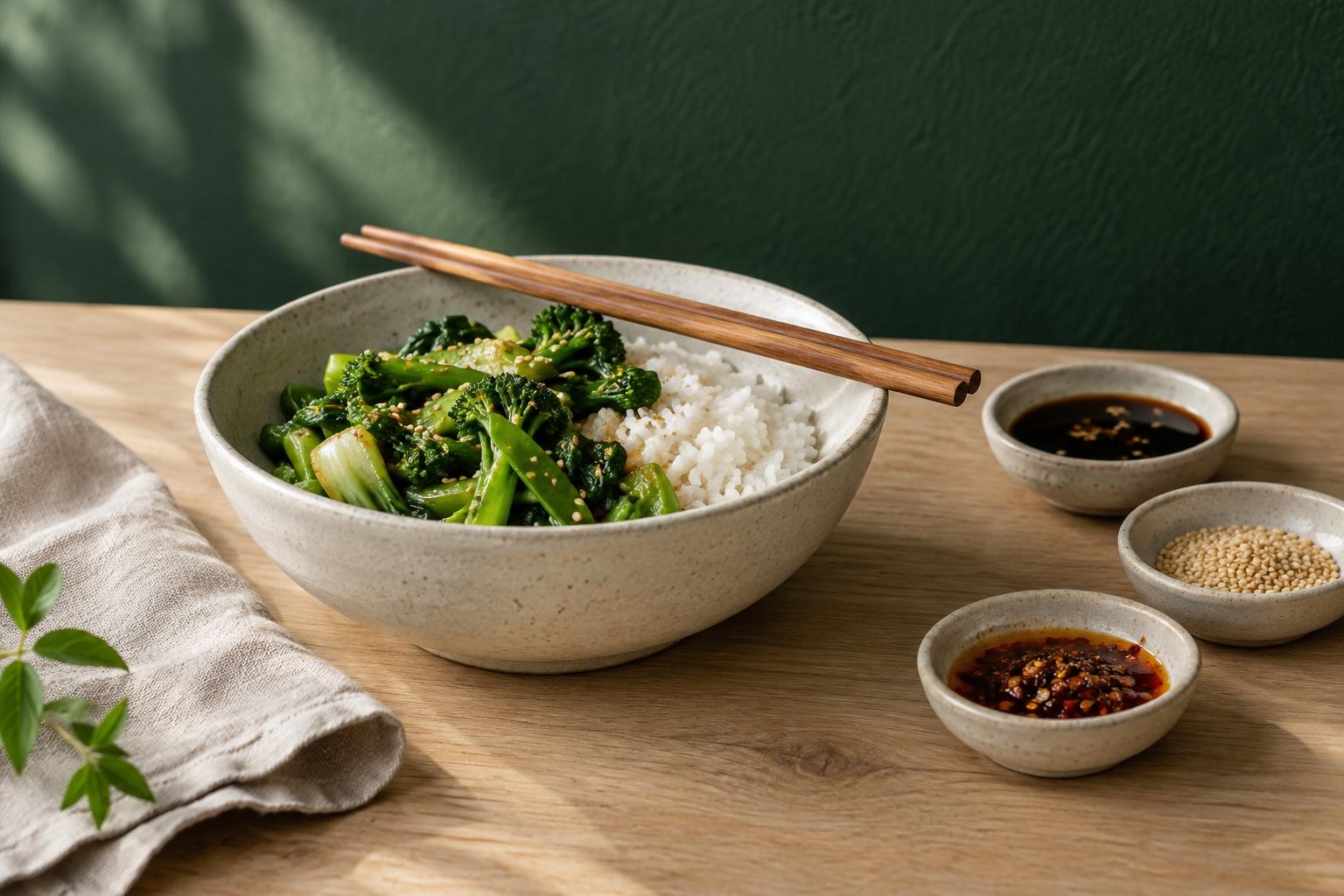
In Chinese and other Asian restaurants, allergens are often not in the main part of a dish but in the sauces: soy sauce is traditionally brewed with wheat, oyster sauce contains molluscs, fish sauce contains fish, and sesame oil is sesame. On top of that there is the wok, where many dishes are cooked one after another. If you need to avoid soya, sesame, peanuts, gluten, fish or crustaceans, ask not only about the dish but about the sauces and how it is prepared.
In short: Ask about the sauces, not just the dish. Soy sauce traditionally contains wheat, oyster sauce and fish sauce contain molluscs and fish, and many dishes contain sesame or peanuts. And ask whether the wok is cleaned between dishes.
Where the allergens are
The overview below describes how sauces and ingredients are traditionally made. Recipes and brands differ from place to place, so it does not replace what the restaurant tells you.
Sauces and seasonings:
- Soy sauce: contains soya and is traditionally brewed with wheat, so it contains gluten. Tamari is a soy sauce that is often made without wheat. Ask.
- Oyster sauce: made from oysters, so molluscs, often with wheat and soya.
- Fish sauce: made from fish, common in Thai and Vietnamese cooking.
- Hoisin sauce: contains soya, often wheat and sesame as well.
- Sesame oil and sesame: in many marinades and as a topping.
- Shrimp paste: made from crustaceans, in many South-East Asian curries and sauces.
Dishes and sides:
- Peanuts: in kung pao (Gong Bao) dishes, satay sauces and as a topping.
- Cashews and other nuts: in many stir-fried dishes.
- Noodles: mie and egg noodles are made from wheat, egg noodles also with egg. Rice noodles and glass noodles are traditionally made without wheat.
- Spring rolls, wontons and tempura: batter or coating made from wheat.
- Deep-fried and sweet and sour dishes: coated in flour, often with egg.
Where it goes wrong in the kitchen
The wok. In many kitchens, dishes are stir-fried one after another in the same wok. Without cleaning in between, sauce and nuts from the previous dish are left behind.
The fryer. Spring rolls, tempura and deep-fried meat often go into the same oil.
Ready-made sauces. Many kitchens use ready-made sauces. Then only the label knows exactly what is in them. Ask whether you can see it.
Five questions before you order
- "Which sauces are in this dish?" Not just: "Is there soya in it?"
- "Do you use soy sauce made with wheat, or do you have one without?"
- "Are there peanuts, sesame or nuts in it, including as an oil or topping?"
- "Is the wok cleaned between dishes?"
- "Can I see the label on the sauce?"
The duty to give allergen information applies in Asian restaurants just as it does everywhere else. You can ask about the 14 major allergens in every dish.
Dishes worth asking more about
Some dishes look simple at first glance and still have allergens in the sauces:
- Fried rice: often made with soy sauce and egg.
- Steamed vegetables: often served with oyster or soy sauce.
- Soups: the stock can contain fish, crustaceans or soy sauce.
- Curries: Thai curry pastes often contain shrimp paste or fish sauce.
What this article cannot do
Asian cuisines vary enormously, from Canton to Thailand. This overview describes traditional ingredients, not what is cooked in a particular restaurant. What you eat is your decision, based on the information you get on the spot.
Frequently asked questions
Is rice in a Chinese restaurant gluten-free?
Rice itself contains no gluten. But fried rice is often made with soy sauce, which traditionally contains wheat. Ask.
What is tamari?
A soy sauce that is often made without wheat. Whether a particular tamari is gluten-free is on the label.
Is MSG (glutamate) an allergen?
No. Glutamate is not one of the 14 major allergens and does not have to be labelled as an allergen. Despite the similar name, it has nothing to do with gluten.
Sources
- Bundesministerium für Gesundheit (Austrian Ministry of Health): Empfehlung zur schriftlichen Allergeninformation bei nicht vorverpackten Lebensmitteln („offene Waren“), 2014 (recommendation on written allergen information for non-prepacked food)
- Gesundheitsministerium, verbrauchergesundheit.gv.at: FAQ Allergeninformation bei unverpackten Lebensmitteln (FAQ on allergen information for non-prepacked food)