- Traces
- Allergens
- Eating out
- EU law
"May contain traces": what it means in a restaurant, and what the EU wants to change
"May contain traces" is voluntary information, on packaging and in restaurants alike. What it means, why restaurants often leave it out, and what the European Commission wants to harmonise by 2027.

4 min read

"May contain traces" is voluntary information. No manufacturer and no restaurant has to give it, and if it is missing, that does not mean there are no traces. The duty to give allergen information covers the ingredients of a dish, not what can get in through shared equipment, surfaces or oil. That is exactly what the European Commission wants to change: it is working on harmonised rules for trace warnings, with adoption planned for the end of 2027. This article explains what the warning means today, why restaurants often leave it out, and what you can ask instead.
In short: The 14 allergen letters on Austrian menus show ingredients, not traces. Today, traces are voluntary information with no common rules. If traces matter to you, ask about the fryer, the work surface and the equipment.
Ingredient or trace: the difference
An ingredient is anything that goes into a dish on purpose, even in small amounts: the flour in the sauce, the butter in the mash. Ingredients from the list of 14 major allergens have to be declared, in a restaurant either in writing or orally.
A trace is something that gets in unintentionally: flour dust in the air, leftovers in the fryer, crumbs on the chopping board. Traces are not ingredients. That is why the duty does not apply to them.
What "may contain traces" means today
According to the Austrian Ministry of Health, "may contain traces of ..." is voluntary information. At the moment there are no common EU rules for it: no set amounts, no obligation, no standard wording. Countries handle it differently.
For you, this means:
- A trace warning tells you the business sees a risk. It does not tell you how big the risk is.
- No trace warning tells you nothing at all. There may be no risk, or nobody may have added the warning.
What the EU wants to change
In February 2026, the European Commission announced a draft of harmonised rules for trace warnings. Specialists call this "precautionary allergen labelling", or PAL for short. According to the Commission, the aim is for people with allergies to get clear, consistent information and not have to avoid food unnecessarily. Adoption of the rules is planned for the fourth quarter of 2027.
What the rules will look like, and whether they will also apply to restaurants, is not yet clear. Until then, what applies today still applies: traces are voluntary.
In the restaurant: what to ask instead
Because traces do not have to be on the menu, your questions matter. These four go straight to the places where traces come from:
- "Is it fried in the same oil as breaded food or fish?"
- "Is it prepared on the same surface or board as [your allergen]?"
- "Are the pan, wok or grill cleaned in between?"
- "Do you have dishes you can prepare separately?"
If the answers are vague, that is an answer too. For people with severe allergies, it can be a reason to choose a different dish or a different restaurant.
What the letters on the menu show
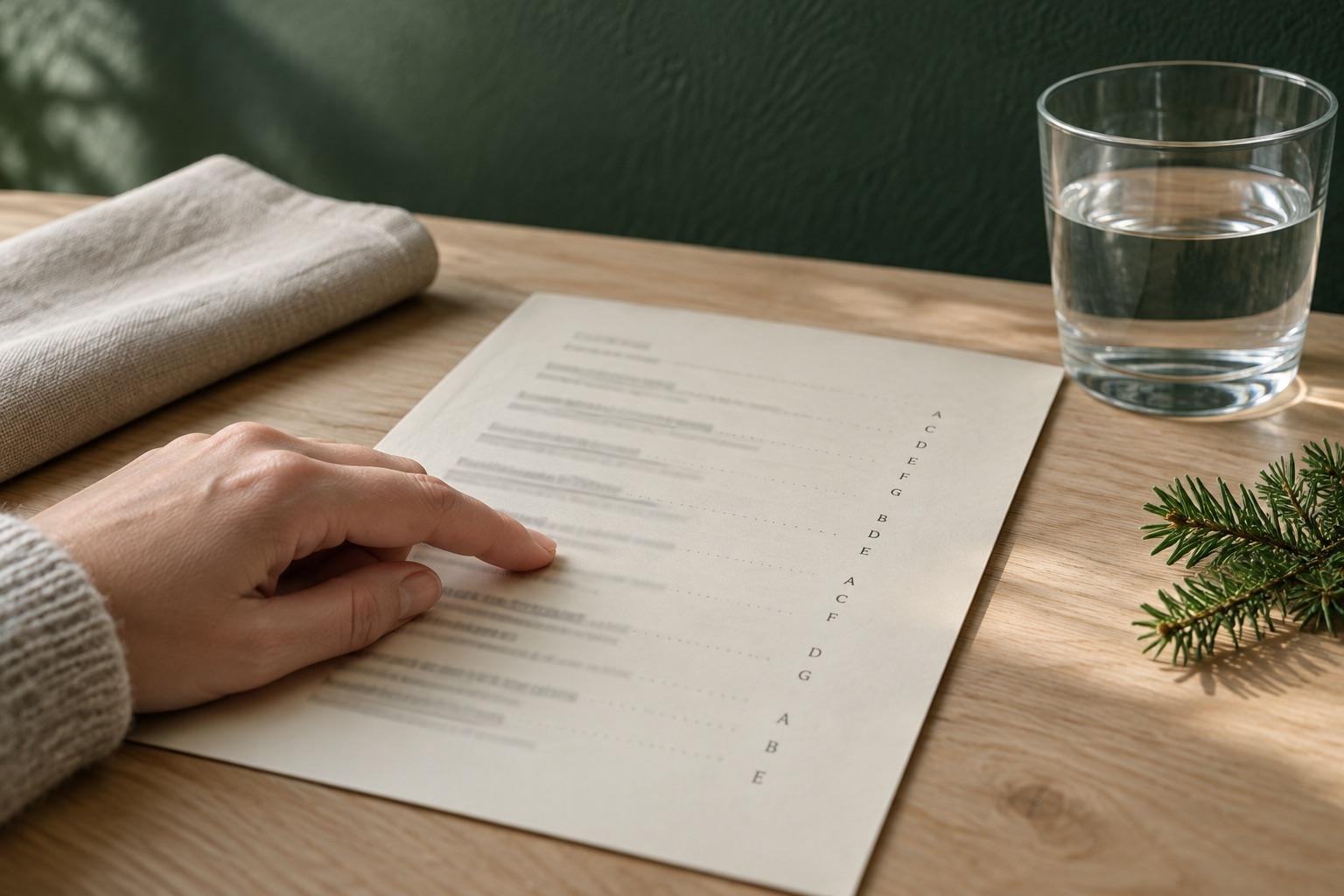
The allergen letters A to R on Austrian menus stand for ingredients. A dish without an A has no ingredient containing gluten. It can still contain traces, for example if it is fried in the same oil as schnitzel. There is more on this in our article on the allergen letters on the menu.
What this article cannot do
How sensitive people are to traces varies a great deal. What counts as a risk for you is best discussed with your doctor or dietitian. What you eat is your decision, based on the information you get on the spot.
Frequently asked questions
Does a restaurant have to declare traces?
No. The duty covers the 14 major allergens as ingredients. Trace warnings are voluntary.
Does "gluten-free" also mean no traces?
"Gluten-free" is a separate, regulated claim: no more than 20 mg of gluten per kilogram in the finished product. That limit includes small amounts from traces.
When will the new EU rules come in?
Adoption is planned for the fourth quarter of 2027. After that, there is usually a transition period. When the rules will reach everyday life is not yet clear.
Sources
- Food Safety Magazine: EU Considers Adoption of Harmonized Precautionary Allergen Labeling Rules, 27 February 2026
- Gesundheitsministerium, verbrauchergesundheit.gv.at: FAQ Allergeninformation bei unverpackten Lebensmitteln (FAQ on allergen information for non-prepacked food)
- AGES: Grenzwerte für „glutenfrei“ (Durchführungsverordnung (EU) Nr. 828/2014) (limits for "gluten-free" under Implementing Regulation (EU) No 828/2014)