- Christmas
- Eating out
- Allergies
- Restaurant
Christmas dinner at a restaurant with an allergy: what to sort out when you book
At Christmas many restaurants cook one fixed festive menu for a full house. Why the phone call when you book is the best moment to raise allergies, and where allergens hide in the classic dishes.

5 min read
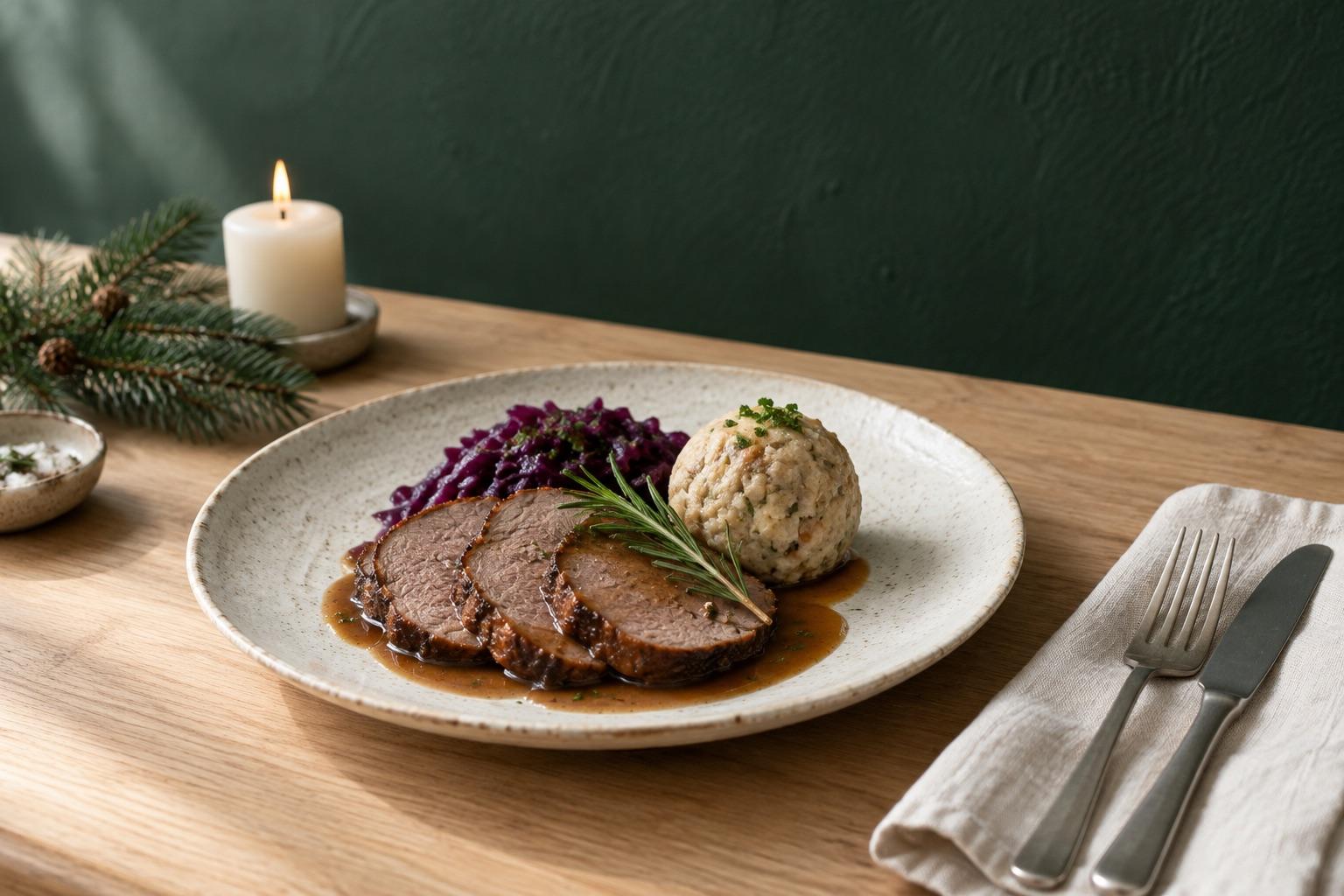
At Christmas many families eat out, and on those days kitchens usually cook one fixed festive menu for a full house. For someone with an allergy, that is both an opportunity and a risk. The menu is set in advance, so the kitchen can tell you exactly what is in it. On the night itself, though, there is hardly any time for that. The best moment to sort out allergies is the phone call when you book. Here is what to ask, where allergens hide in the classic dishes, and how to keep the night itself calm.
In short: Sort out allergies when you book, not at the table. Ask about the allergens in every course, including sauces, dumplings and dessert. Ask for the name of a contact person for the night.
Why the holidays are different
On a normal evening you order à la carte and can ask at the table. Over the holidays a lot changes:
- A fixed menu. Many restaurants only offer a festive menu. The kitchen has prepared everything and can change little on the spot.
- A full house. Several sittings on the same night, every table at the same time. There is hardly any time for a long conversation at the table.
- Temporary service staff. Around the holidays, the front of house often includes people who do not know the restaurant and the menu as well.
That sounds like more risk. But it is also an advantage: because the menu is fixed, the kitchen can tell you days in advance what is in each course.
Where allergens hide in festive classics
The overview below describes how these dishes are made the classic way. Every kitchen cooks differently. So it does not replace the information from the restaurant, it helps you ask the right questions.
- Semmelknödel and Serviettenknödel (bread dumplings): bread rolls made from wheat, usually with egg and milk.
- Sauces with roasts and goose: often thickened with flour, sometimes finished with Obers (cream). Stocks can contain celery.
- Rotkraut (red cabbage): depending on the recipe with apples, lingonberries, sometimes nuts.
- Things served in soup: Frittaten (pancake strips), Grießnockerl (semolina dumplings) and Leberknödel (liver dumplings) usually contain flour or semolina and egg. The soup itself can contain celery.
- Fish at Christmas: fried carp is breaded, so it comes with flour, egg and breadcrumbs.
- Desserts and biscuits: flour, butter, egg and often nuts. Over the holidays, desserts are often bought in.
The phone call when you book
You can say these sentences almost word for word:
- “One person in our group has [allergy or intolerance]. Can you tell me which allergens are in each course?”
- “Does that include the sauces, the soup and the dessert?”
- “Is there an alternative for this course, or will something just be left out?”
- “Could you email me the allergens?”
- “Who will be the contact person in the front of house on the night?”
Ask for the information to be noted on the booking. That way the team working on the night will see it too.
What the restaurant has to tell you
In Austria, a restaurant serving unpackaged food has to give information about the 14 major allergens. This can be in writing, for example with letter codes on the menu, or verbal. Verbal information is allowed if a clearly visible notice points it out and trained staff answer your questions. The information has to be based on written documentation. If the kitchen changes a recipe at short notice, it has to pass that on to the trained staff.
Whether a dish may contain traces of an allergen, on the other hand, is voluntary information. If that matters to you, ask about it directly.
On the night
- Say when you arrive that the allergy is on the booking. That way the staff know who it is about.
- Check briefly with every plate: “Is this the plate without [allergen]?”
- Watch out for shared things. The bread basket, butter and side dishes in bowls move around the table.
- Ask again at dessert. Over the holidays, the dessert in particular is often swapped at short notice.
What no restaurant can promise
A kitchen cannot rule out traces completely, least of all on its busiest night. Good preparation makes the night easier to plan, it does not take the risk away. What gets eaten is decided by the person with the allergy.
Frequently asked questions
When should I call?
As soon as you book. Many restaurants plan their festive menu and their shopping days in advance. The earlier the kitchen knows, the more likely it can cook a real alternative.
What if the restaurant cannot name the allergens?
Then ask who knows, and whether you can have the list by email. If you get no information, that is a reason to choose another restaurant.
Can I bring my own food?
That depends on the restaurant. Some allow it for allergies, especially for children. Ask when you book.
What do the letters on the menu mean?
In Austria, the letters A to R stand for the 14 major allergens, for example A for cereals containing gluten, C for egg and G for milk. The key should be on the menu or available if you ask.
Sources
- Gesundheitsministerium (Austrian Ministry of Health), verbrauchergesundheit.gv.at: FAQ Allergeninformation bei unverpackten Lebensmitteln (FAQ on allergen information for unpackaged food)
- Wirtschaftskammer Österreich (Austrian Economic Chamber): Allergeninformationsverordnung (BGBl. II Nr. 175/2014) (Austrian Allergen Information Regulation)